Research
Unraveling the Mural’s MysteriesThrough rock art documentation and research, Shumla is unraveling mysteries of the past and preserving irreplaceable legacies for future generations.
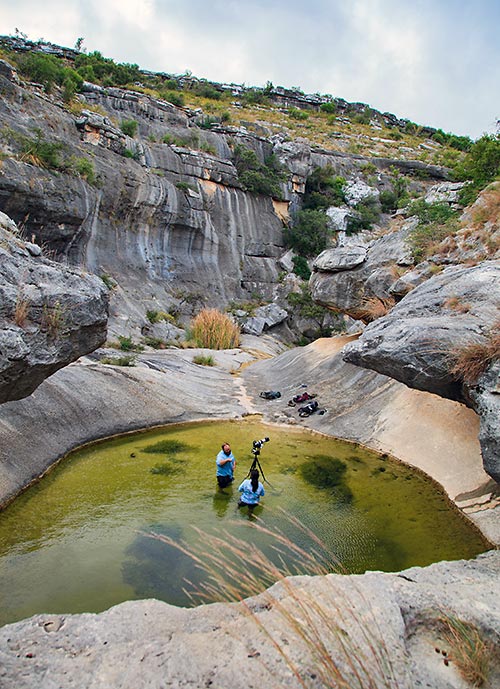
Shumla conducts research in one of the most archaeologically rich areas in the world — the Lower Pecos Canyonlands region of southwest Texas, west of Del Rio. One of the oldest, best-preserved records of human habitation on the North American continent can be found in this semi-arid environment. This record dates from the late Pleistocene (ca. 11,000 BP) through European contact.
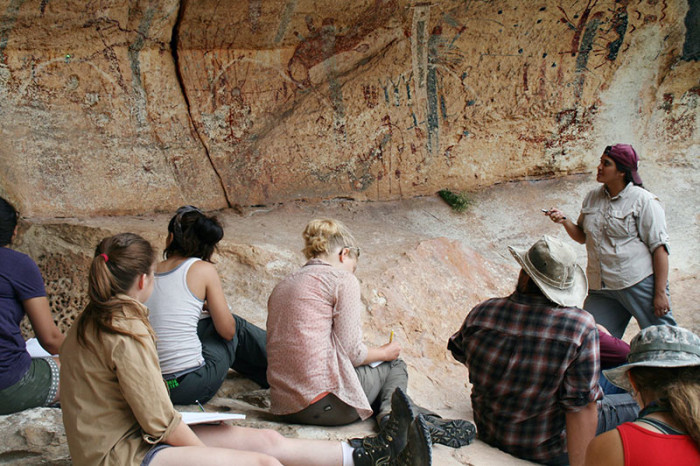
Shumla’s team of archaeologists, interns, and volunteers conducts intensive documentation of the rock art murals of the Lower Pecos. Applying the internationally acclaimed Shumla Method of Rock Art Documentation, we are preserving the oldest “books” in North America.
Podcast
Marfa Public Radio’s Nature Notes podcast captures the essence of the rock art and Shumla’s efforts to save it!
 Dr. David Whitley
Rock Art Researcher, Council of Directors of the ICOMOS International Rock Art Committee
Give to Shumla
Help us keep up the momentum!
The Race to Preserve the Oldest “Books” in North America
The rock art of the Lower Pecos is one of the most incredible rock art traditions in the world. Like a book, each mural was authored and composed to communicate beliefs and ideas. The magnificent depictions of anthropomorphic (human-like) and zoomorphic (animal-like) figures still glow with the subtle ochre tints of the surrounding land, even after 4,000 years. No fewer than 320 rockshelters in the region are known to contain rock art and new sites are discovered yearly.
Unfortunately, the damming of the Rio Grande to create the Amistad Reservoir in 1969 flooded many mural sites and set the stage for widespread flooding and siltation that is threatening to destroy this ancient library of myths and beliefs that has existed for thousands of years.
We are in a race against time to preserve this library before it is gone. Though efforts have been made to preserve the art in place, nothing can reliably stop the destruction of the art by rushing water, animal activity, vandalism and environmental changes. We can, however, document these sites to such a degree that they can be studied forever and even recreated once lost.
 Lenville Stelle
Former Chair, Rock Art Interest Group of the Society for American Archaeology
Shumla has been actively documenting rock art sites since our founding in 1998. Over the years, we have continually enhanced our methods, applying technologies and processes that greatly increase our speed and efficiency, as well as the depth and quality of the data we collect. In 2012, Shumla launched our Border Canyonlands Archaeological Project (BCAP), our flagship preservation and research project. Through this five-year effort we fully recorded some of the most complex and most endangered mural sites in the region. It has also been in the last five years that we’ve made the most important technological advances in our documentation method, setting the stage for our next phase in the fight to preserve the oldest “books” in North America. In response to the worsening flooding and in recognition of the hundreds of sites yet to be documented, Shumla launched a new initiative in 2017 – The Alexandria Project. The Alexandria Project concluded in December 2020 with the successful Level 1 digital documentation of 234 sites across the region! It was a highly ambitious undertaking that resulted in over 25TB of image and informational data.
Current Efforts
We are as busy as ever! We are engaged in the preparation and curation of the enormous library of information we collected through the four-year Alexandria Project. It is vitally important that the Alexandria Project Archive be made accessible to researchers and educators right away and for years to come. This archive will be the basis for remarkable discoveries that change our understanding of ancient North America.
We are also expanding our rock art radiocarbon dating and archaeological investigations in the region throught The Hearthstone Project. In fact, we’ve received funding from the National Endowment for the Humanities and well as the National Science Foundation to support our endeavors. We are also, as always, focused on our internship and educational programming.
Stay tuned and keep an eye on our eNewsletters. We’re always happy to share the incredible work we are doing to preserve the oldest “books” in North America through documentation, research, stewardship and education.
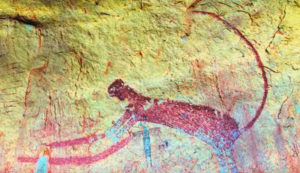 The Panther Cave Pictograph 3D Modeling Project is a great example of the collaborative work Shumla conducts as part of our ongoing conservation and education efforts in the Lower Pecos River basin. Panther Cave, named after the giant panther at the far end of the site, contains Pecos River and Red Linear style pictographic imagery dating back approximately 4,000 years. The site, situated in Seminole Canyon State Park, is endangered by periodic flooding and is accessible only by boat. The 3D model was part of a documentation project with our partners to digitally preserve the site for future generations.